Advances in Quantum Machine Learning
Quantum machine learning (QML) has attracted increasing interest as quantum computing advances toward practical learning and data-processing applications. Recent developments have expanded QML beyond foundational models toward more advanced topics, 、 including distributed quantum learning, privacy-preserving quantum machine learning, quantum federated learning, and robust learning under realistic quantum noise.
These tutorials introduce the foundations of quantum computing and QML from a privacy perspective, followed by an in-depth discussion of emerging topics in privacy-preserving quantum machine learning. We will cover representative QML models and learning paradigms, quantum federated learning (QFL), quantum differential privacy, privacy auditing, and other emerging topics in secure and distributed quantum learning. We will also discuss their connections to classical machine learning and highlight key theoretical and practical challenges in the development of scalable and trustworthy QML systems.
The tutorial series is intended to provide researchers and practitioners with a structured understanding of recent advances in QML, while identifying open challenges and promising directions for future research.
Main Presenters
Baobao Song
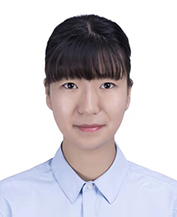
Baobao Song is a PhD student at the University of Technology Sydney. Her research interests include quantum computation, differential privacy, and smart tourism.
Dr. Shiva Pokhrel
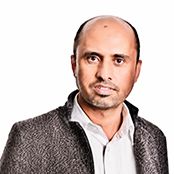
Shiva Raj Pokhrel is a distinguished Marie Curie Fellow, Senior IEEE Member, and Research Leader at Deakin University. He is also a Senior Lecturer at the School of IT, Deakin University, Australia. With a PhD in ICT Engineering, Dr. Pokhrel brings a wealth of expertise in experimental distributed quantum computing, communication, and large-scale quantum experiments. His career spans roles as a Research Fellow at the University of Melbourne and a seven-year tenure as a System Engineer, solidifying his foundation in both theoretical and applied research. Dr. Pokhrel is a leader in mobile computing, quantum technologies, and distributed quantum and quantum machine learning systems.
Prof. Gang Li
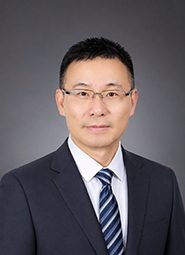
Prof. Gang Li is currently a Professor at the School of IT, Deakin University, Australia. He is an internationally recognized expert in data mining and business intelligence. He has supervised and co-supervised 18 PhD students to completion, and published over 200 papers in the project area, with Google scholar citations of 6,000+ and an h-index of 35. CI Li holds one international patent and has substantial research experience in graphical models and privacy-aware data science. Her proposed preference model method won the IEEE/ACM ASONAM 2012 Best Paper Award, and his series work on trajectory analysis won the IFITT award for Journal Paper of the Year (2015 and 2017). He has developed a mechanism for privacy preservation that retrieves user rating information while retaining anonymity in product and tag recommendation systems. We have also investigated information loss in coupled datasets and proposed an improved differential privacy mechanism to accommodate coupled datasets. These works have been presented at prestigious conferences and published in journals, including IEEE Transactions on Information Forensics and Security, and IEEE Transactions on Data and Knowledge Engineering, and have won the best student award at PAKDD. He is an associate editor for Decision Support Systems (Elsevier), the Journal of Information & Knowledge Management (World Scientific) and Cyber Security (Springer).
Key References
• Song, B., Pokhrel, S. R., Vasilakos, A. V., Zhu, T., & Li, G.(2025). Toward a hybrid quantum differential privacy. IEEE Journal on Selected Areas in Communications, 43(8), 2890–2897.
• Song, B., Pokhrel, S. R., Vasilakos, A. V., Zhu, T., & Li, G. (2026). Quantum-KIP: Kernel Inducing Points for Quantum Privacy. IEEE Transactions on Information Forensics and Security.
• Gurung, D., & Pokhrel, S. R. (2026). LLM-QFL: Distilling large language model for quantum federated learning. IEEE Transactions on Network and Service Management.
• Pokhrel, S. R. (2026). Quantum Position Navigation Timing for Autonomous Vehicles: A Federated Learning Framework. IEEE Transactions on Vehicular Technology.
• Gurung, D., Pokhrel, S. R., & Li, G. (2025). Quantum federated learning for metaverse: Analysis, design, and implementation. IEEE Transactions on Network and Service Management, 22(3), 2595–2606.
• Gurung, D., Pokhrel, S. R., & Li, G. (2026). Quantum federated learning: A comprehensive review and analysis. IEEE Transactions on Artificial Intelligence.
ATIS-2025 Training Program on "Quantum Techniques for Information Security"
About the Program
The program is designed to equip IT graduates and early-stage researchers with a rigorous foundation in quantum computation, communication, and learning paradigms that form the backbone of next-generation secure information systems.
The five-day program (2 hours per day) combines conceptual lectures with structured hands-on sessions using Qiskit and related frameworks, ensuring a strong link between theory and practical implementation. The program will be delivered in hybrid mode globally, and all sessions will be recorded for participants.
Course Structure for 5 Days
Day 1: Quantum Information Foundations — State vectors, operators, gates, and noise models
Day 2: Quantum Cryptography and Secure Communication — QKD, teleportation, and quantum authentication
Day 3: Quantum Machine Learning (QML) — Variational circuits, QNN architectures, and hybrid quantum-classical models
Day 4: Quantum Federated Learning (QFL) — Multi-agent quantum training, privacy preservation, and distributed security
Day 5: Advanced Applications and Capstone Integration — Quantum-secure AI pipelines and performance evaluation
All recordings can be found here.
Presenters
• Dr Shiva Raj Pokhrel
• Devashish Chaudhary
• Navneet Singh
• Swathi Chandrasekhar
• Dev Gurung
• Shanika Nanayakkara
• Baobao Song
PRICAI-2026 Tutorial on "Quantum Machine Learning: Challenges in Design and Implementation"
About the Tutorial
The tutorial begins with an overview of quantum computation and representative QML models, including variational quantum circuits, quantum neural networks, and hybrid quantum-classical learning frameworks. It then discusses key design challenges such as quantum data encoding, circuit expressivity, trainability, measurement constraints, and the impact of quantum noise. In addition, the tutorial highlights implementation issues on near-term quantum devices, including finite-shot estimation, resource limitations, scalability, and benchmarking.
By connecting theoretical foundations with practical implementation considerations, this tutorial aims to provide participants with a clear understanding of both the opportunities and limitations of QML, as well as its potential applications in AI, privacy-preserving learning, and distributed intelligent systems.
Tutorial Handout
More materials will be added soon.
Presenters
Dr. Shiva Pokhrel
Shiva Raj Pokhrel is a distinguished Marie Curie Fellow, Senior IEEE Member, and Research Leader at Deakin University. He is also a Senior Lecturer at the School of IT, Deakin University, Australia. With a PhD in ICT Engineering, Dr. Pokhrel brings a wealth of expertise in experimental distributed quantum computing, communication, and large-scale quantum experiments. His career spans roles as a Research Fellow at the University of Melbourne and a seven-year tenure as a System Engineer, solidifying his foundation in both theoretical and applied research. Dr. Pokhrel is a leader in mobile computing, quantum technologies, and distributed quantum and quantum machine learning systems.
Baobao Song
Baobao Song is a PhD student at the University of Technology Sydney. Her research interests include quantum computation, differential privacy, and smart tourism.
Prof. Gang Li
Prof. Gang Li is currently a Professor at the School of IT, Deakin University, Australia. He is an internationally recognized expert in data mining and business intelligence. He has supervised and co-supervised 18 PhD students to completion, and published over 200 papers in the project area, with Google scholar citations of 6,000+ and an h-index of 35. CI Li holds one international patent and has substantial research experience in graphical models and privacy-aware data science. Her proposed preference model method won the IEEE/ACM ASONAM 2012 Best Paper Award, and his series work on trajectory analysis won the IFITT award for Journal Paper of the Year (2015 and 2017). He has developed a mechanism for privacy preservation that retrieves user rating information while retaining anonymity in product and tag recommendation systems. We have also investigated information loss in coupled datasets and proposed an improved differential privacy mechanism to accommodate coupled datasets. These works have been presented at prestigious conferences and published in journals, including IEEE Transactions on Information Forensics and Security, and IEEE Transactions on Data and Knowledge Engineering, and have won the best student award at PAKDD. He is an associate editor for Decision Support Systems (Elsevier), the Journal of Information & Knowledge Management (World Scientific) and Cyber Security (Springer).


